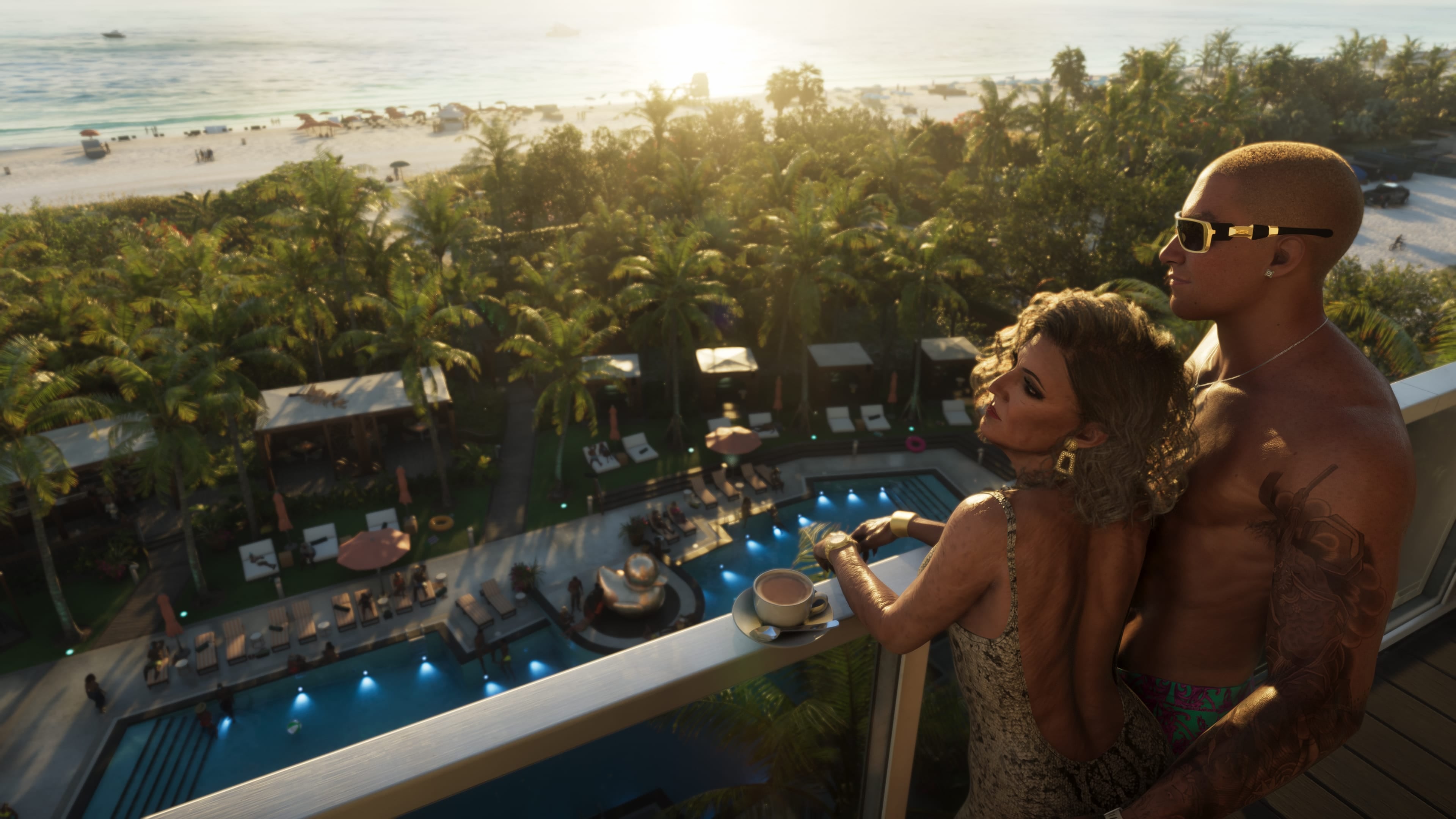
VICE CITY IN REAL LIFE
You can call Vice City “GTA’s Miami” and everyone instantly knows the temperature: palms, hot pavement, high-rise money, beaches built for cameras and an appetite for excess. The better version of that sentence is more interesting. Rockstar is not making a travel brochure. It is taking recognisable South Florida signals and turning the volume up until the city becomes its own thing.
Rockstar has officially named modern-day Vice City, Ocean Beach, Little Cuba and VC Port. It has also put Vice City inside the wider fictional state of Leonida. Those names are the evidence. The exact street-by-street matches people post online are not.
Ocean Drive’s hotel strip
How to read these pairs: the left image is GTA VI; the right is a real Miami reference. A pair is only an exact match when the text says so. Otherwise, it shows the architectural or cultural signal Rockstar is echoing.
The first comparison is the strongest one in this story. A Miami landmark breakdown by Axios identifies the fictional Hotel Dixon in Rockstar’s trailer material alongside the real Hotel Victor on Ocean Drive. The names, Art Deco vertical signage, palms and neon make the visual rhyme obvious. Rockstar has not said it copied the building one-for-one, so we call it a likely inspiration rather than a confirmation.
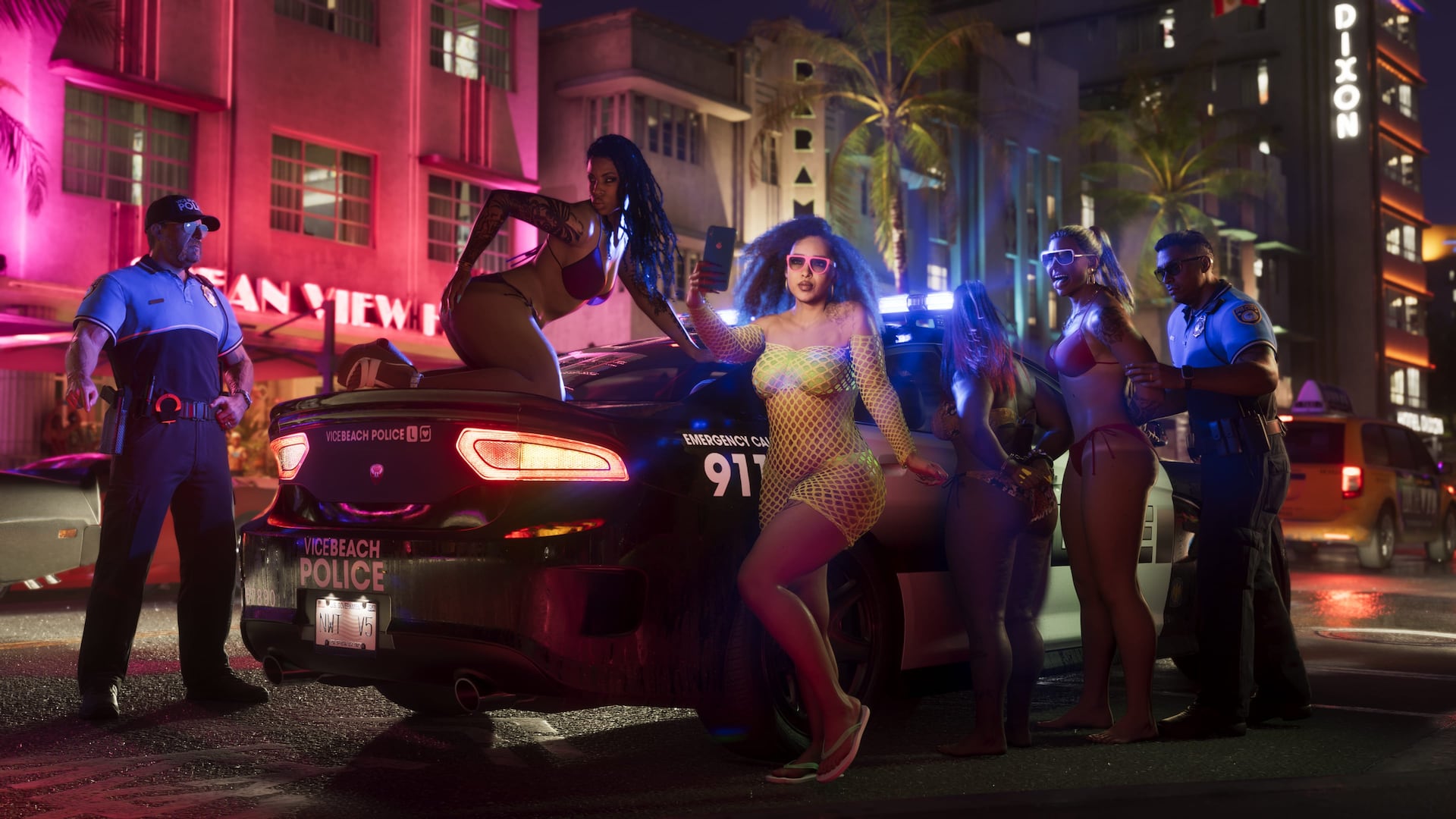
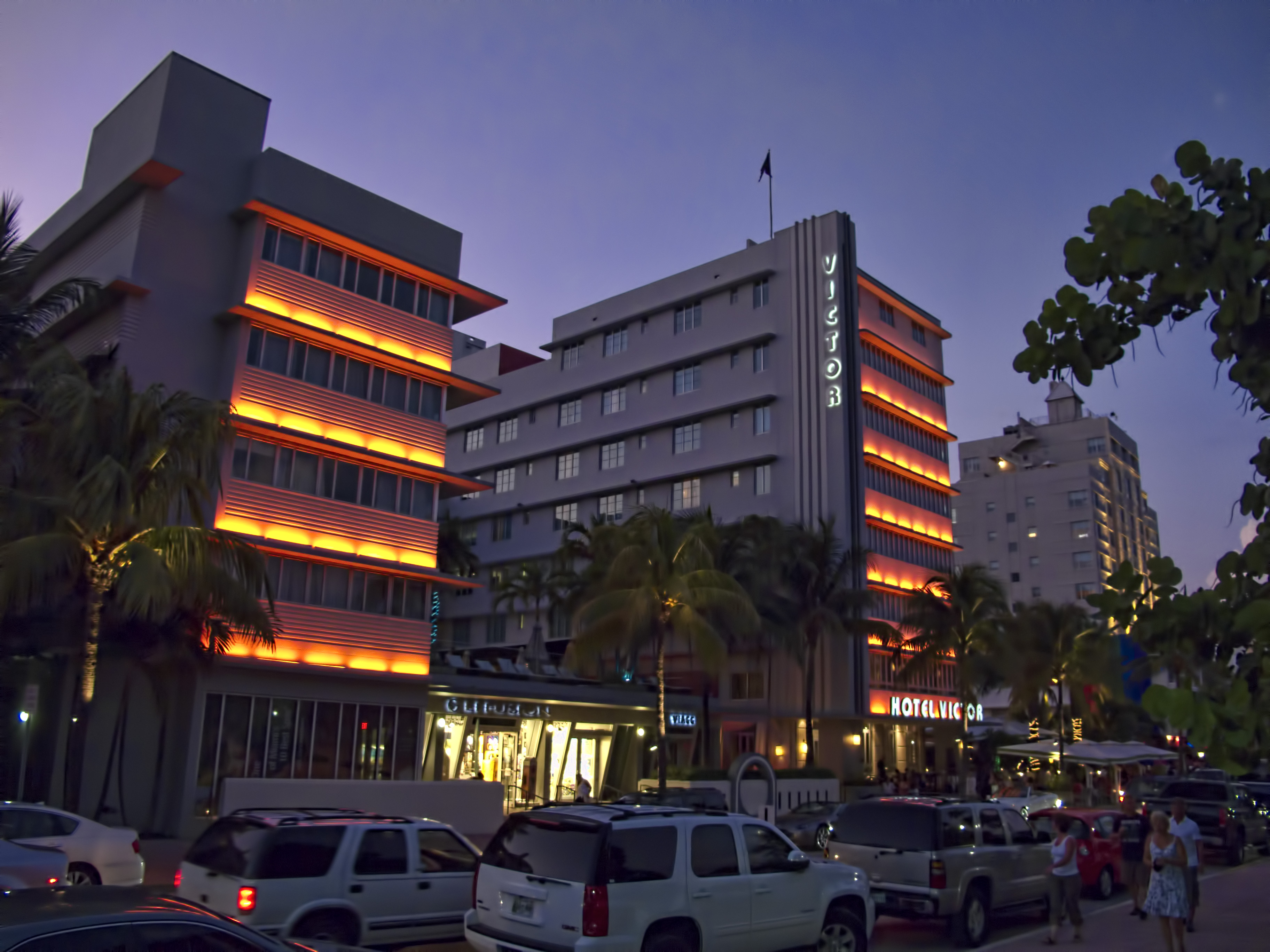
What to notice: the useful comparison is not the crowd or police car. It is the hotel strip behind them: vertical signs, illuminated Art Deco forms and palms pressed up against the street.
Little Cuba: what Rockstar actually confirms
Rockstar’s Vice City overview calls out Little Cuba and its bustling panaderías. Calle Ocho in Little Havana is useful real-world context for that cultural signal, but no official material in this article identifies a matching block or intersection. That is where the evidence stops.
The detail still matters. It says Vice City is not being framed as beaches and towers alone. Food, storefronts, local rhythm and the people moving through them are part of the city’s official texture.
VC Port: the wording is the evidence
Rockstar calls VC Port the cruise ship capital of the world. PortMiami uses the real-world title Cruise Capital of the World. The wording makes the inspiration easy to understand, even though Rockstar has not published a one-to-one port layout or an official matching aerial shot.
Four more Miami signals to watch
These are useful comparisons, not Rockstar confirmations of exact replicas. The real fun is spotting the visual language rather than pretending a fictional map is a GPS overlay.
- Lummus Park and South Beach hotels. Miami preservation experts highlighted the Art Deco hotels around Lummus Park in the first trailer. That beachfront strip is one of the clearest reasons Ocean Beach reads instantly.
- MacArthur and Venetian causeways. Bridges, bike lanes, water and a skyline on the other side make Miami’s crossings feel like cinematic transitions. They are a better clue to Vice City’s rhythm than any single building.
- Brickell and Downtown. Glass towers across Biscayne Bay are the money-and-power side of the city. Rockstar can rearrange every block and still make the silhouette unmistakable.
- Wynwood and the Art District. Murals, low warehouses and nightlife give a very different flavour from the beach. If Vice City wants contrast, this is the part of Miami’s visual vocabulary to watch.
This is the rule for reading GTA VI’s real-life DNA: trust the official names and descriptions, enjoy the comparison, then stop before it turns into a fake map. Vice City looks exciting because it recognises Florida’s visual language. It stays interesting because Rockstar is building a fictional city with its own excess, hustle and consequences.
For the image-by-image version, see the expanded Vice City Wiki guide.